Make Your Sleep Environment Comfortable
Make a few practical changes to light, sound, temperature and bedding so your sleep space feels more supportive of rest.
Read MoreFIT & MATERIALS · 8 MIN READ
Skin tolerance, facial contours and coverage preferences differ. Understand the design choices behind a more personal fit, and what the evidence can actually tell you.

A tape that feels unobtrusive on one face can feel bulky, pull at the edges or be uncomfortable to remove on another. The difference is not simply a preference for one color. A mouth tape meets a moving, curved surface with its own skin condition, hair and dimensions. Its adhesive, backing and outline work together at that contact surface.
For adults considering mouth tape, personal fit means balancing skin tolerance, coverage and handling. It does not mean everyone needs tape, or that finding a comfortable shape establishes a sleep benefit. This guide explains design choices; it does not recommend taping as treatment for snoring or sleep apnea.
The useful question is specific: which properties matter for this person's skin and face? Gender, a sporty lifestyle or an attractive pattern cannot answer that on their own.
Adhesive contact has two sides: how the strip holds during wear and how it releases afterward. The outermost skin layer, the stratum corneum, can be disturbed when an adhesive is removed. In experimental tape-stripping research, body site, application pressure, contact time under pressure and removal rate all changed the measured skin-barrier response. These experiments were not overnight tests on lips, but they show why a single “strength” label cannot describe the whole interaction. Löffler and colleagues, 2004.
A separate healthy-volunteer study found differences between individual medical tapes even within the same adhesive category. It tested other products on the back and forearm, not SouZou mouth tape, so it cannot rank our designs. The practical lesson is to consider the finished construction and your own skin response, rather than assuming every tape with a particular adhesive name behaves alike. Turnbull and colleagues, 2024.
If you have known adhesive sensitivity, seek advice before use. Do not apply tape to broken or irritated skin, or treat stinging and persistent redness as something to get used to. Follow the product's removal instructions and stop if your skin reacts.
The outline in a product photograph is only part of the design. Compare the strip's actual dimensions, where its adhesive is placed and how much of the surrounding skin it contacts. A long, narrow strip and a broad rounded rectangle can have quite different contact patterns, even when their widest dimensions look similar.
As a design principle, increasing the adhesive footprint creates more possible contact area, but it also covers more skin. A larger strip may bridge a facial contour or wrinkle instead of lying evenly. A smaller strip may feel less intrusive, yet provide less usable contact on a particular face. Neither size is automatically better.
A helpful distinction is nominal area versus effective contact: the first is the adhesive area on the unused strip; the second is the portion that actually meets the skin. Shape, placement and facial hair can make those two areas different. This is a mechanical explanation of fit, not a measured ranking of our products.
Hair can interrupt contact between adhesive and skin and can be pulled during removal. A shape that suits a clean-shaven face may therefore feel different around a moustache. Selecting a stronger adhesive does not, by itself, solve this mismatch; it can change the removal experience too.
Facial contours and ordinary movement also matter. When a strip bends around an uneven surface, its edges and central span may move differently. The useful comparison is whether the intended placement allows it to sit without bunching or uncomfortable tension, rather than whether its outline looks more substantial.
These are reasons to compare dimensions and placement instructions carefully. They are not reasons to stretch a strip tightly, layer extra tape or override the directions to make it stay put. A design that needs those workarounds may be a poor fit for that person.
The backing gives a strip its body and carries the adhesive. Its thickness, flexibility and construction influence how it bends and feels; the adhesive layer determines the contact interface. Changing one layer can change the experience of the whole strip. A soft-feeling fabric does not, on its own, establish how gently the adhesive will release.
Material terms also describe different things. Air permeability concerns air passing through a material; water-vapor transmission concerns moisture vapor; neither is a measurement of how well someone can breathe while wearing the finished product. The adhesive coating and finished construction matter when evaluating material performance.
For a useful comparison, look for information about the complete product: backing, adhesive, dimensions, intended placement and removal directions. “Medical-grade” or a named adhesive supplier is not a substitute for evidence of finished-product tolerance or suitability for an individual. We do not infer numerical breathability, hypoallergenic performance or overnight comfort from a material name.
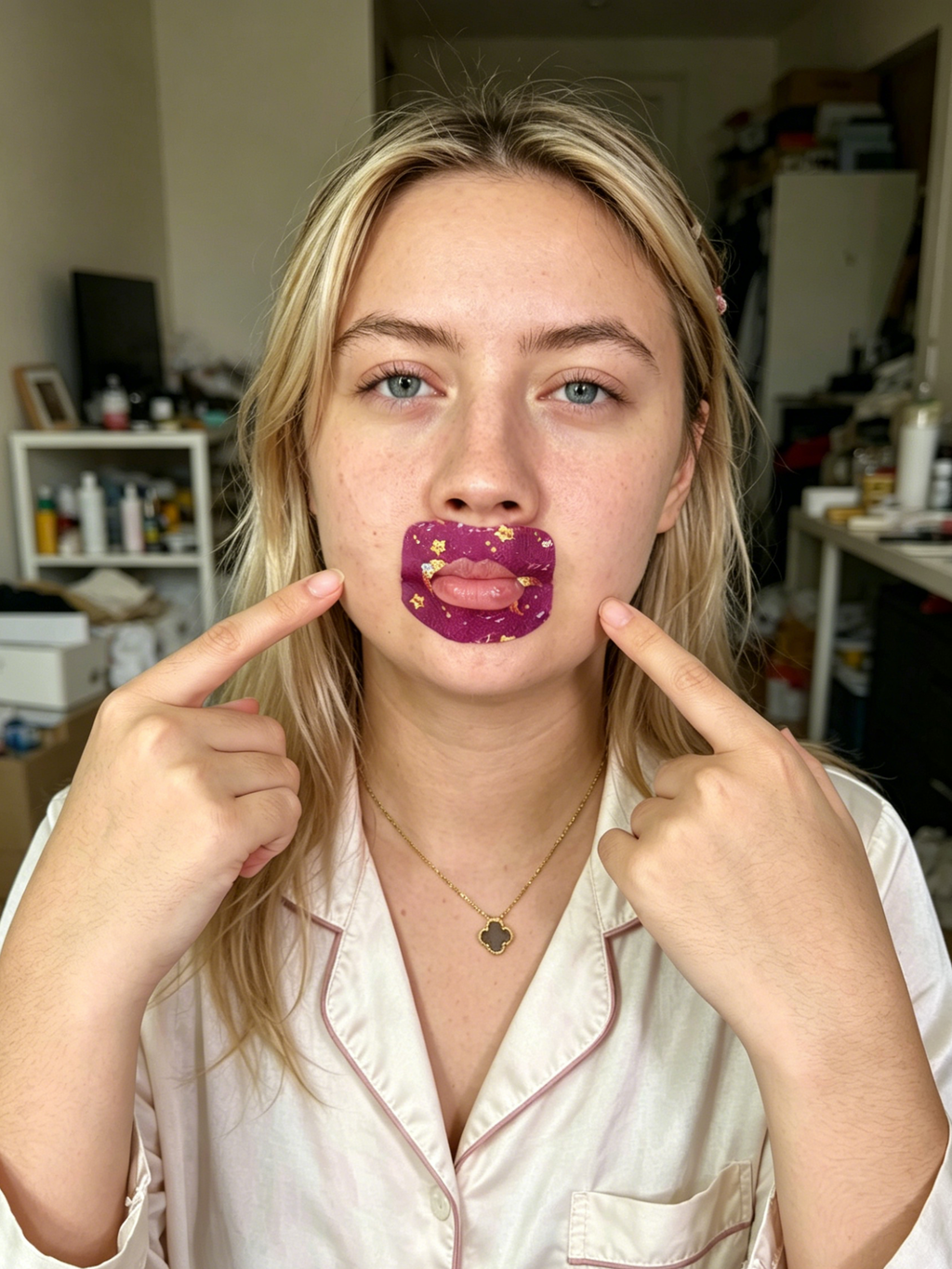
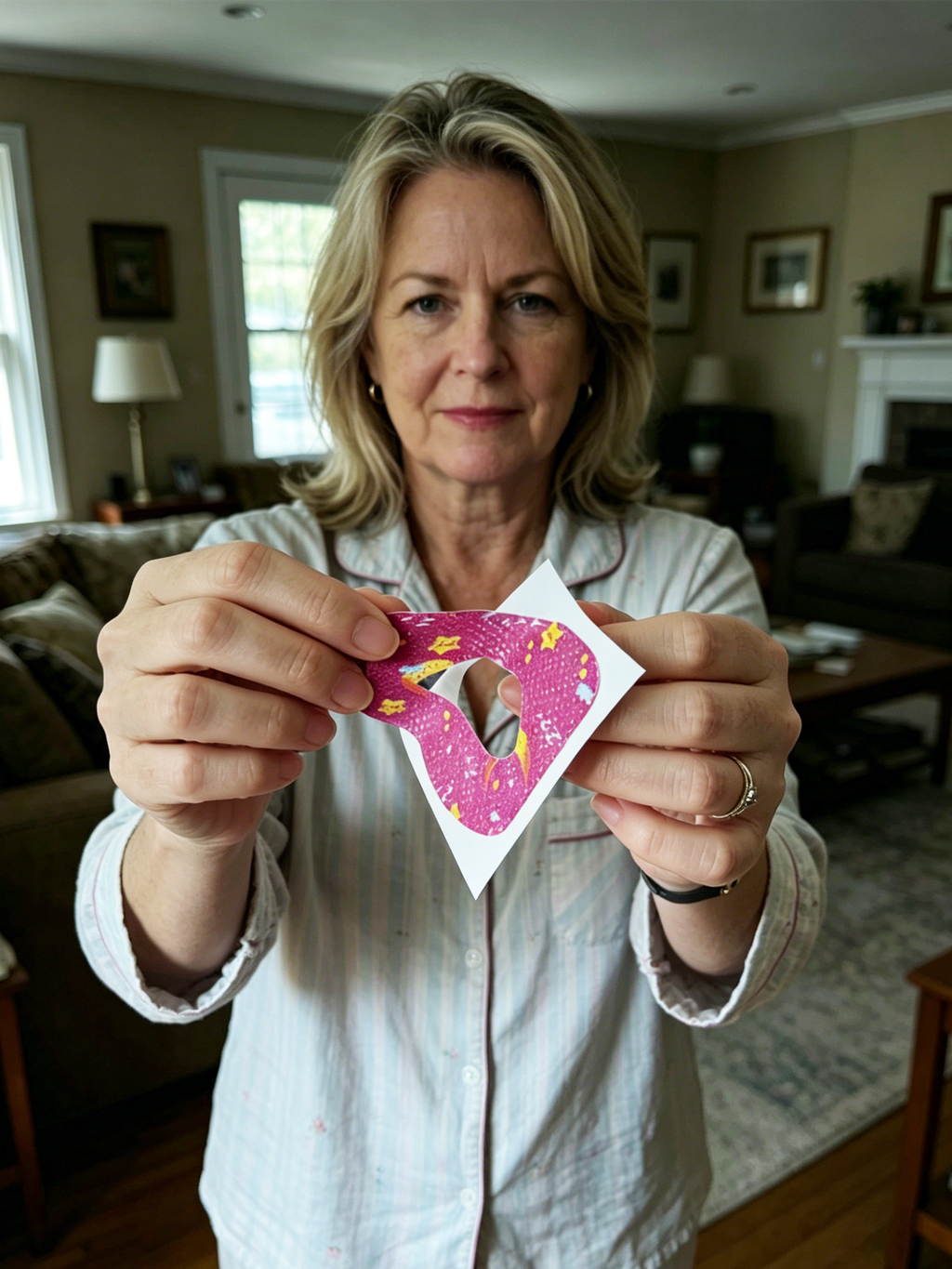
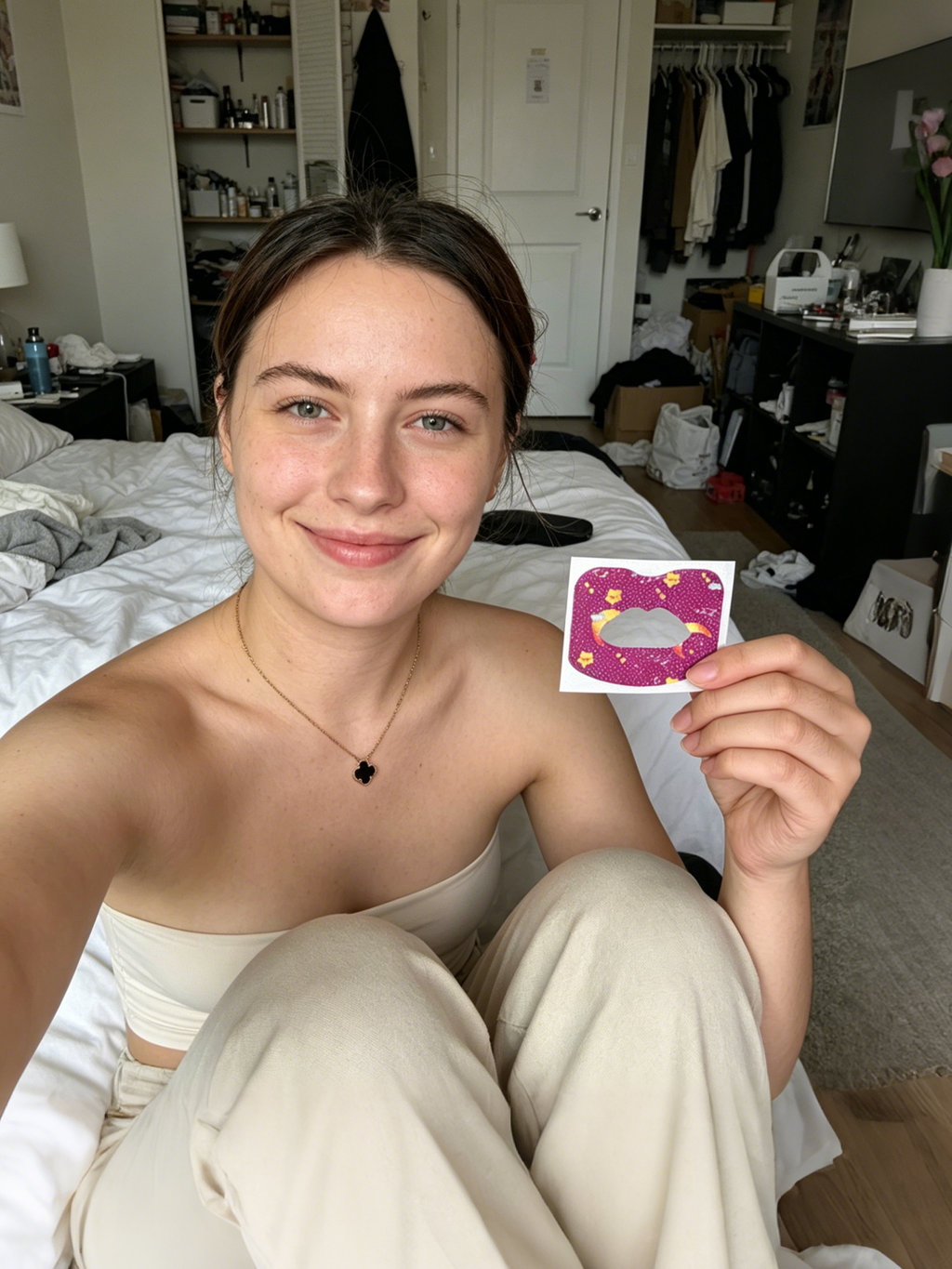
A solid center, a small hole, an open center and a center bridge create different layouts. An opening leaves part of the central area uncovered. A bridge places a strip of material across it. Those differences can change perceived coverage, handling and where material spans the lips.
The visible opening is not necessarily the same as the amount of exposed skin or the usable adhesive footprint. Compare the complete outline and the adhesive placement, not just the hole. A cut line in an image also should not be assumed to be an open passage; check the product's actual construction and directions.
These features do not establish adequate airflow, protection from suffocation or suitability when the nose is blocked. An opening is a geometric feature, not clinical clearance to use mouth tape. There are no product-specific airflow or clinical results presented in this guide that would support such a claim.
The following situations are comparison priorities, not prescriptions for a particular tape:
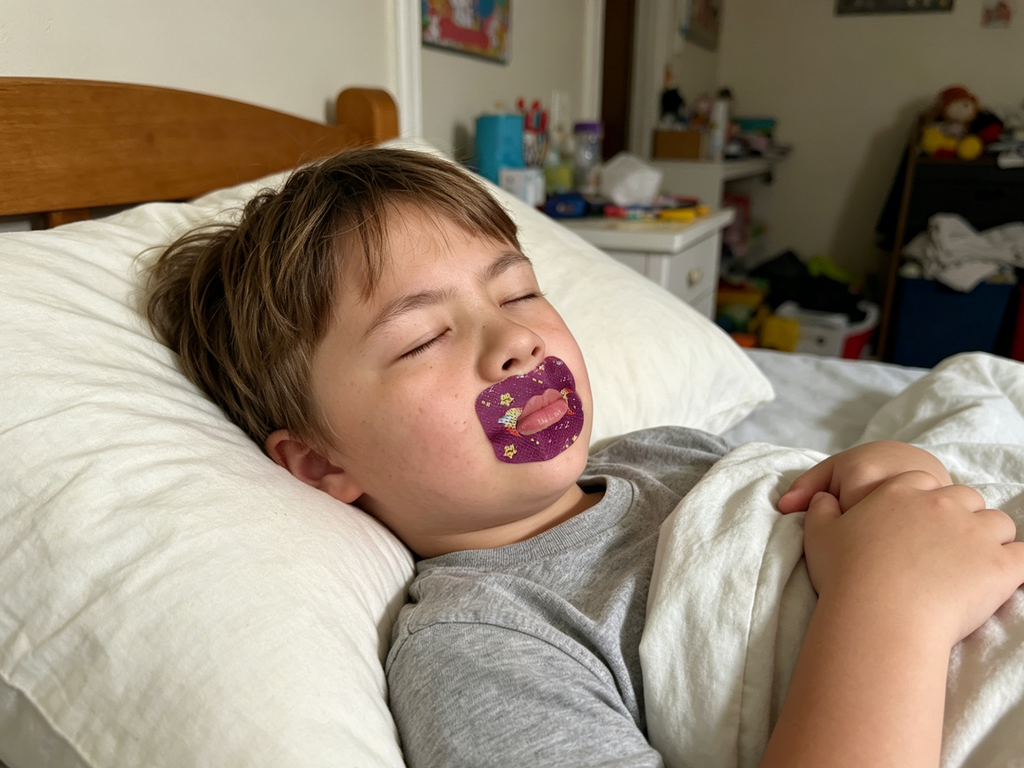
The same person can have several of these priorities. A choice can also change when skin becomes irritated or a routine changes. For a child with habitual snoring or possible sleep-disordered breathing, seek pediatric assessment instead of choosing a smaller or cartoon-pattern tape. AASM pediatric sleep-apnea guidance.
Comfort during placement cannot tell you what happens to the airway during sleep. A preliminary 2022 study reported improvements in selected adults with mild obstructive sleep apnea, but included only 20 people who met its criteria and tolerated mouth sealing. That does not establish a general benefit or prove that one commercial shape is better than another. Lee and colleagues, 2022.
A 2024 study of mouth closure during drug-induced sleep endoscopy found that airflow improved in some patients and worsened in others, particularly a subgroup relying heavily on oral breathing with obstruction near the soft palate. It studied short-term physiology in a clinical setting, not consumer tape use throughout normal sleep. Yang and colleagues, 2024.
Do not use tape to work around a blocked nose or to self-treat unexplained snoring, gasping, witnessed breathing pauses or suspected sleep apnea. These concerns call for healthcare advice; a different tape design cannot replace assessment. NHLBI: sleep-apnea symptoms.
Before comparing styles, separate the decision into four questions:
Product instructions come first. A brief comfortable experience while awake does not establish overnight safety. If a design does not suit you, discontinuing use is a valid outcome.
Our Shop categories help you compare visible designs. Use the product details and specifications to understand the differences, and contact support@souzou.com when a material or dimension is unclear. The value of offering different designs is a more informed choice based on real differences between people.
Published September 20, 2026. Written by SouZou for general product education. Design explanations are not product-comparison trials or medical advice. The accompanying image is an AI-generated material illustration, not a laboratory photograph or performance test.
RELATED ARTICLES
Make a few practical changes to light, sound, temperature and bedding so your sleep space feels more supportive of rest.
Read MoreUnderstand what your nose does, what that means for nighttime comfort, and when breathing symptoms deserve attention.
Read MoreFive everyday starting points for a more consistent sleep routine, with small changes you can make your own.
Read More